Dr. Gymbro
←

#fruit intake

1 article
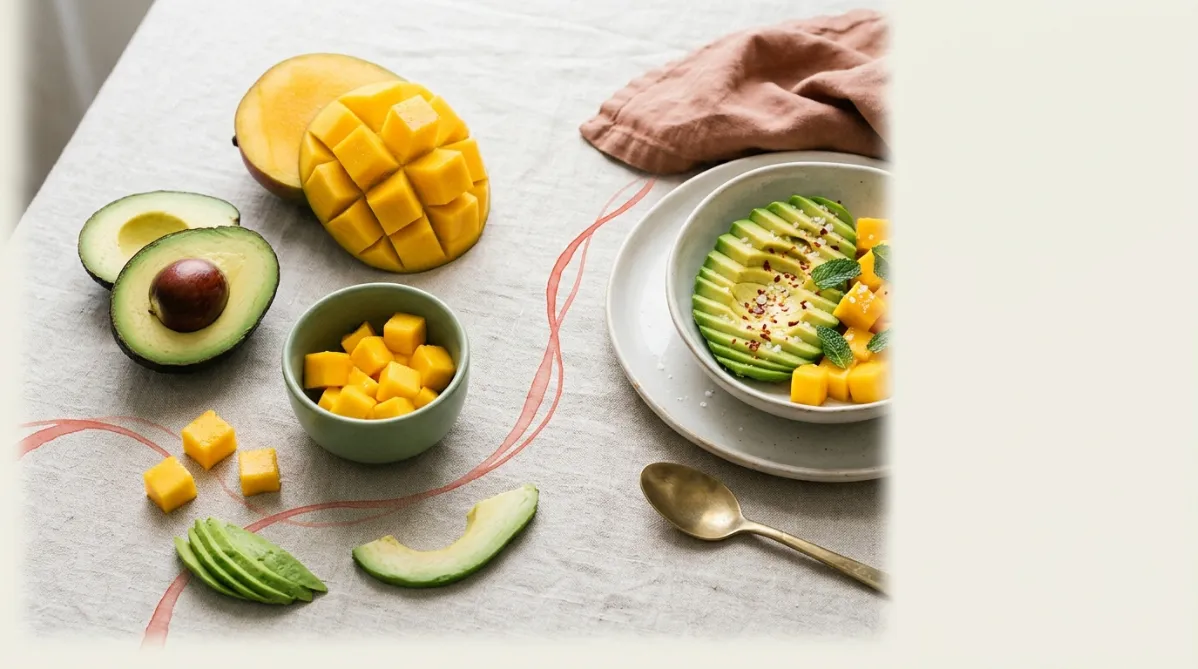
A wide, softly lit editorial still life photographed from slightly above on a pale oat-colored linen surface. On the left, a halved ripe Hass avocado with its glossy pit still nestled in one half, the flesh a buttery gradient from deep green at the skin to creamy yellow at the center. Beside it, a ripe mango is sliced into thick cheeks with a neat crosshatch pattern, the golden-orange flesh catching the light. A small ceramic bowl in matte sage green holds a cup of diced mango cubes. A few scattered mango cubes and a thin avocado slice fan out across the surface.

On the right, a minimalist ceramic plate holds a simple composed bowl: sliced avocado fanned over mango, with a sprinkle of flaky sea salt, a pinch of chili flakes, and a few torn mint leaves. A linen napkin in muted terracotta is draped casually at the edge of the frame. A single brushed-brass spoon rests nearby.

A subtle graphic touch ties in the artery theme: a thin, elegant line of warm coral red, like a hand-drawn ribbon or gentle wave, curves through the negative space on the surface, suggesting a blood vessel and flow without looking clinical. It passes softly beneath the fruit as if painted on the table in watercolor.

Natural morning window light enters from the upper left, creating soft long shadows and gentle highlights on the fruit's surface. The palette is warm and fresh: avocado greens, mango golds and oranges, cream, sage, and a hint of coral. Shallow depth of field blurs the background edges into creamy neutrals, leaving generous clean empty space on the right third for title text. Modern wellness magazine aesthetic, crisp but organic, high-end food photography, with a subtle film-like grain and calm, balanced composition.
nutrition

Avocado + Mango al Giorno: Cosa è Cambiato nelle Arterie (e Cosa Non è Cambiato)

BY DR. GYMBRO ·

Otto settimane di avocado e una tazza di mango al giorno hanno modificato alcune caratteristiche delle arterie di adulti con prediabete, ma non hanno influenzato la glicemia. In uno studio randomizzato su 82 partecipanti, la dilatazione mediata dal flusso è aumentata di circa l'1 % nella dieta a base di frutta, mentre è diminuita nel gruppo di controllo a basso contenuto di fibre, con una differenza tra i gruppi di circa 2,1 % (P = 0,008). La pressione diastolica è migliorata soprattutto negli uomini, mentre la maggior parte degli altri marcatori non ha mostrato differenze. Lo studio è stato in parte finanziato dal Hass Avocado Board e dal National Mango Board; vediamo quindi cosa dimostra, cosa no e come inserire questa combinazione in una dieta da dimagrimento o di mantenimento.

This page is available in